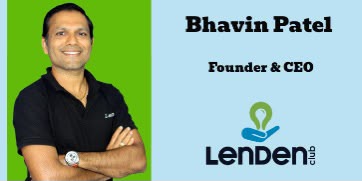
Founder explains how the model works, what returns to expect and where the risks lie
Mumbai, November 23, 2026: Peer-to-peer (P2P) lending has moved from the edges of Indian investing to a regulated, fast-growing asset class. In a detailed masterclass on the Unfiltered Founder podcast, LenDenClub founder Bhavin Patel explained how it works, what it pays and who it suits.
LenDenClub says it has disbursed more than ₹21,000 crore in loans across its platforms. Patel argued that this scale shows investors are looking beyond equity, gold and real estate. “A portfolio is never complete without debt,” he said.
At the heart of his pitch is diversification. A lender does not have to back a single borrower. A ₹10 lakh investment can be spread across hundreds or even a thousand borrowers, so a few defaults barely dent the overall portfolio. A corporate bond, he pointed out, puts the entire amount on one entity. Lenders pick the tenure, repayment frequency, borrower income band and interest rate, and Patel likened the process to choosing products on an online shopping site. Repayments land in the lender’s bank account the next working day through escrow accounts, and the money can be redeployed on the platform.
On returns, Patel was careful with the numbers. He said lenders can expect roughly 10 to 13 percent a year after defaults and platform fees, which range from 1 to 6 percent depending on the loan tenure. Portfolio defaults have moved between 2.3 and 4 percent over the past five years and are currently near 3.5 percent, though he cautioned that the figure can rise or fall.
The borrowers, he said, are mostly salaried people and small shopkeepers who are often turned away by banks and larger lenders because of ticket size, pin code or income criteria. Patel said repayment behaviour in this segment held up even during the Covid shock of 2020.
For first-time investors, his advice was to start small. A lender should begin with ₹1 to 2 lakh and build a book of at least 100 loans, so that a handful of defaults does not distort the picture. Once comfortable, an allocation of 5 to 10 percent of the overall portfolio is reasonable. The regulatory cap on P2P lending is ₹50 lakh. Asked how he would invest ₹10 lakh himself, Patel said he would keep a small amount in a fixed deposit and split the rest between P2P lending and equity mutual funds. Seven-month loans, he said, are his preferred tenure.
Patel named credit default as the biggest risk and urged investors to diversify widely. He also advised checking a platform’s track record, the products it offers and how closely it follows RBI’s P2P rules, even suggesting that AI research tools can help test a platform’s compliance.
The conversation also covered his journey as a founder. LenDenClub grew after the RBI introduced P2P regulations in 2017, went through two loss-making years while changing its business model, and returned to profitability. Patel said his biggest lesson was to treat every part of the business as a source of revenue, never fall below break-even, and avoid hiring expensive talent before the company’s stage justifies it.
The group runs three platforms: LenDenClub, an RBI-registered NBFC-P2P; Insta Money, for small personal loans; and Udhar Saathi, for merchant loans. It plans to expand to ten platforms over the next five years.
Investment in P2P lending carries risk, including the possible loss of principal. Returns are not guaranteed.
More information: lendenclub.com | Instagram: @lenden.club | Bhavin Patel: instagram.com/ unfilteredfounder