
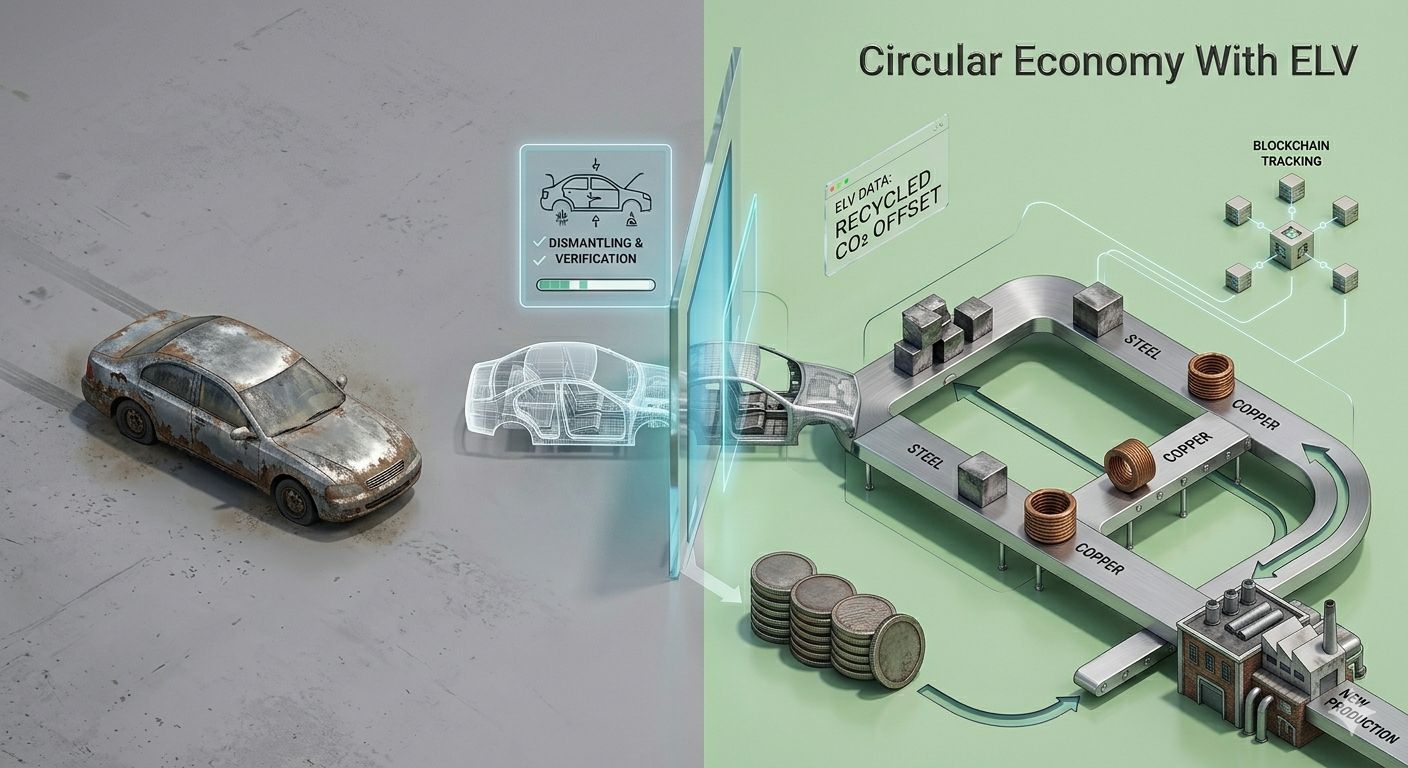
For decades, the story of a car in India did not end where it should have. Once a vehicle reached the end of its usable life, it quietly disappeared into scrapyards scattered across the country. Engines were dismantled, metal was cut and sold, and whatever could be salvaged was traded in local scrap markets. Yet the environmental value of this process remained invisible.
This creates what many in the industry describe as the scrappage climate paradox. Vehicle recycling is one of the most powerful circular economy activities available to the automotive sector, yet until recently it remained disconnected from climate accounting systems and carbon markets.
India is entering a phase where its vehicle park is rapidly aging. Estimates suggest that more than 20 million vehicles are nearing end of life status, and this number is expected to grow significantly over the next decade as stricter emission norms and scrappage policies come into force.
Each of these vehicles contains valuable metals such as steel, aluminium, and copper that can be recycled instead of extracted again from the earth. Recycling these materials requires far less energy than producing them from virgin resources, which means significantly lower carbon emissions.
The challenge has never been the absence of environmental value. The challenge has been the absence of traceability. This is where MMCM is building digital infrastructure that turns vehicle scrappage from a waste management process into a traceable circular economy system capable of generating carbon assets.
The Scrappage Climate Paradox
Vehicle recycling sits at the intersection of circular economy and emissions reduction. Each vehicle contains materials that can reenter manufacturing supply chains instead of being replaced with newly mined resources. When these materials are recovered and recycled, the resulting emissions avoidance can be quantified in metric tons of CO₂e.
However, until recently, the end of a vehicle’s lifecycle effectively disappeared from formal documentation systems.
Vehicles entering informal scrappage yards often lost their identity immediately after intake. Once the Vehicle Identification Number was no longer tracked, the entire dismantling process became unobservable from an emissions accounting standpoint.
This created what industry analysts often describe as a “scrappage climate paradox.” The environmental benefit existed, but the absence of traceability meant that emission reductions could not be validated, verified, or registered within carbon markets.
The Traceability Gap in Vehicle Recycling
India’s traditional scrappage ecosystem has historically been fragmented and largely informal. Many dismantling yards operated without standardized monitoring protocols, making it difficult to produce the structured documentation required for emissions verification.
Without traceability systems, several operational risks emerged.
Hazardous automotive fluids such as engine oil, transmission fluids, and coolants could contaminate soil and groundwater when dismantling practices were not properly documented. High value alloys from vehicle bodies were frequently downgraded into mixed scrap rather than segregated for efficient industrial reuse.
In carbon accounting terminology, this situation created “leakage.” Materials exited the formal industrial supply chain while environmental impacts remained unreported.
For carbon markets, the absence of “proof of processing” created a verification barrier. Carbon credits require validation through approved methodologies, monitoring protocols, and independent third party auditors known as VVBs. Without a verifiable data trail linking a specific vehicle to a specific dismantling process, emission reductions could not be certified.
MMCM’s Digital Infrastructure for Circular Carbon Assets
To address this gap, MMCM has developed a digital infrastructure stack designed to capture operational data across the vehicle scrappage lifecycle.
The first layer is AutoLoop, a platform used by Registered Vehicle Scrapping Facilities (RVSFs) to digitize dismantling operations. AutoLoop functions as a shop floor operating system that manages vehicle intake documentation, VAHAN blacklist verification, compliance checks, and generation of Form 3 certificates confirming the destruction of a vehicle.
At the facility level, vehicles and components are tracked through QR coded tagging systems. Each step in the dismantling workflow generates structured operational data that can be monitored, reported, and verified.
The second layer is DigiELV, which facilitates the management of Certificates of Deposit (CD) that allow vehicle owners to legally transfer and monetize their CD.
The third layer converts the captured operational data into a financial climate asset. Through structured monitoring protocols and verification frameworks, the recycling activity can generate ELV Carbon credits, which represent measurable emission reductions resulting from responsible material recovery.
To support audit readiness, the system uses a 41 point digital measurement, reporting, and verification framework known as dMRV. Data integrity is reinforced through blockchain infrastructure using the Hedera Guardian network, which maintains tamper resistant documentation records.
Incentivizing the Scrappage Sector
One of the structural changes introduced by this system is the creation of an incentive layer for the scrappage sector.
Historically, dismantling facilities operated on thin commodity margins derived from scrap metal sales. Environmental performance or emissions reduction was not financially recognized.
By integrating dismantling data with carbon market methodologies, MMCM enables scrapping facilities to participate in carbon credit generation. When emission reductions are validated and issued through approved registries, a portion of the credit value can be distributed back to the RVSFs responsible for the recycling activity.
Operationally, dismantling facilities are no longer only processing vehicles. They are generating auditable environmental data linked to emissions reductions within global voluntary carbon markets.
Quantifying the Emissions Impact
The environmental impact of ELV processing can be quantified through avoided emissions.
When steel and aluminium are recycled rather than produced from virgin ore, the energy requirements drop significantly. Recycling steel can reduce energy consumption by up to 60 percent compared with primary production, depending on the industrial process and grid emission factors.
Within MMCM’s methodology framework, approximately 0.6 metric tons of CO₂e emissions can be avoided for every metric ton of ELV material processed through verified recycling channels.
To ensure credibility within international carbon markets, these emission reductions are aligned with methodologies certified by Cercarbono and based on United Nations Clean Development Mechanism protocols.
These methodologies define the monitoring protocols, additionality requirements, and verification procedures needed for carbon credit issuance.
Closing the Steel Loop for Automotive OEMs
While scrappage facilities provide the operational supply side of this ecosystem, automotive manufacturers represent the demand side within corporate ESG frameworks.
Automobile manufacturers face increasing pressure to reduce Scope 3 emissions across their value chains. In many cases, 75 to 80 percent of an automotive company’s lifecycle emissions originate from supply chain activities including raw material production.
With digital traceability systems, manufacturers can now obtain cradle to grave visibility into what happens when their vehicles exit the road network. Dismantling records can be linked to specific vehicle models and locations, creating structured lifecycle tracking. The resulting “steel to steel” loop allows recovered automotive metals to be reintroduced into manufacturing processes, reducing reliance on carbon intensive primary materials
